
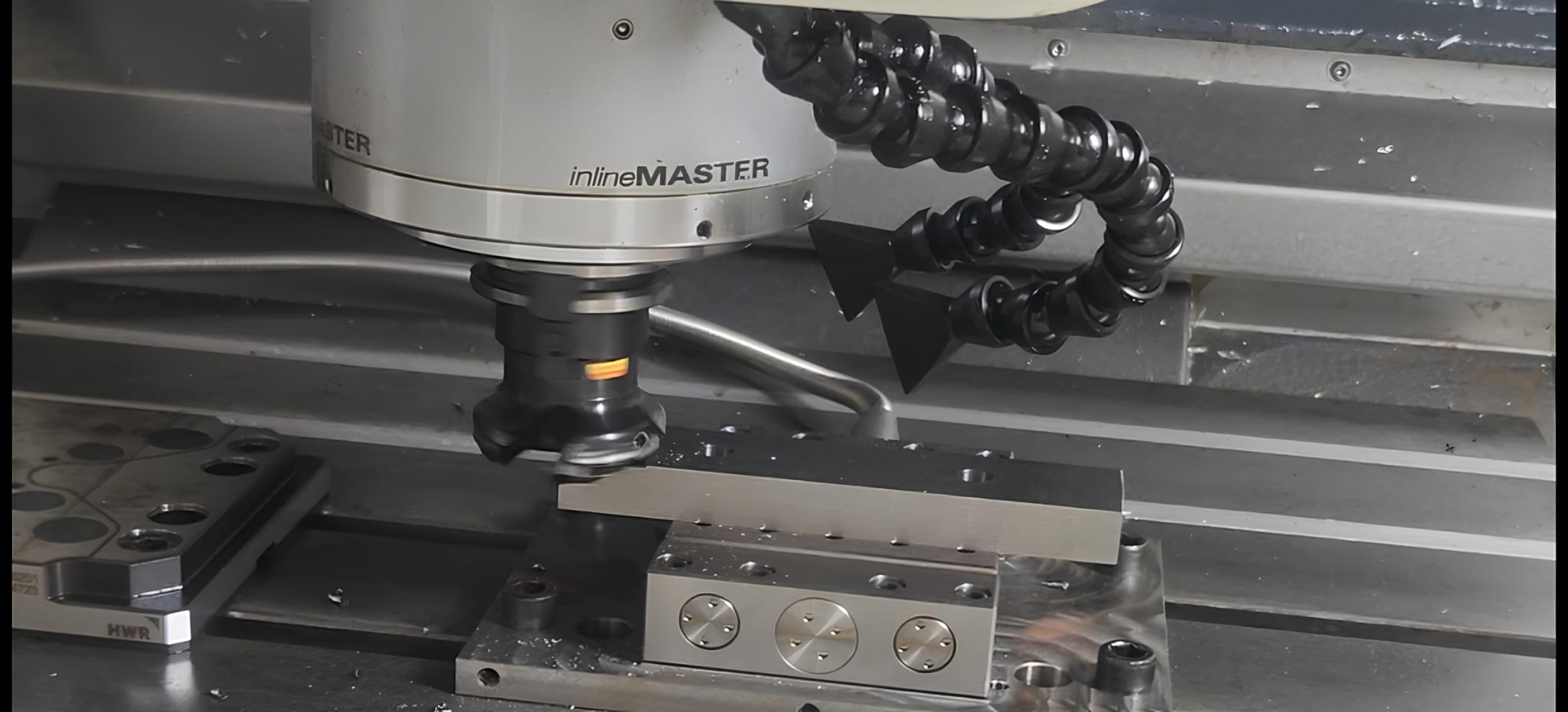
This thesis addresses the characterization, modeling and energy optimization of machining, focusing on the spindle motor as the machine tool’s main actuator. First, a complete measurement chain was set up (Kistler 9129AA dynamometric platform, accelerometer, electrical power measurement). An original calibration procedure using a UR5e cobot was also developed, which gives calibration coefficients that depend on where the force is applied. Second, a mechanical model based on the comoment between the mechanical action wrench and the kinematic wrench links specific cutting pressures to the power dissipated during cutting. This mechanical power is then compared with the electrical power consumed. Third, four original closed-loop identification algorithms (CLLSSVFFR, CLIVSVFFR, CLSRIVFR, CLRIVFR) extend least-squares and instrumental variable methods to the spindle’s parallel PI control architecture, which has a prefilter on its integral path. Finally, an online energy optimization strategy based on RPEM was validated experimentally on a DMG Mori CMX600V. It converges toward a cutting speed close to the manufacturer’s recommended value.
News
THESIS DEFENSE of Jamy VIGNAU - December 2, 2026
Jamy VIGNAU will defend his thesis on December 2, 2026 at 09:00 am in the amphitheater JP DOM of the IMS Laboratory, on the subject: “Identification and energy optimization for machining”.


