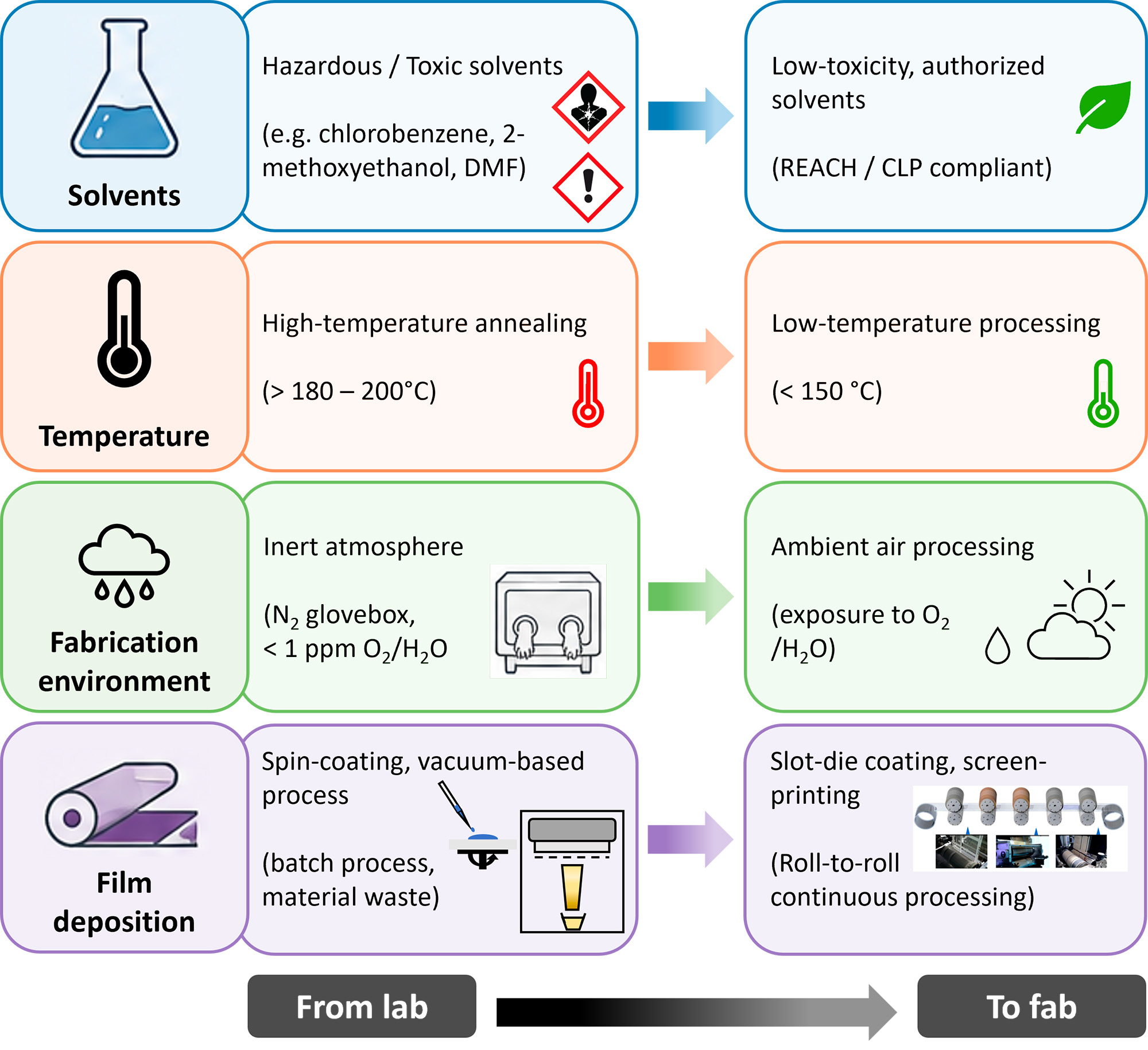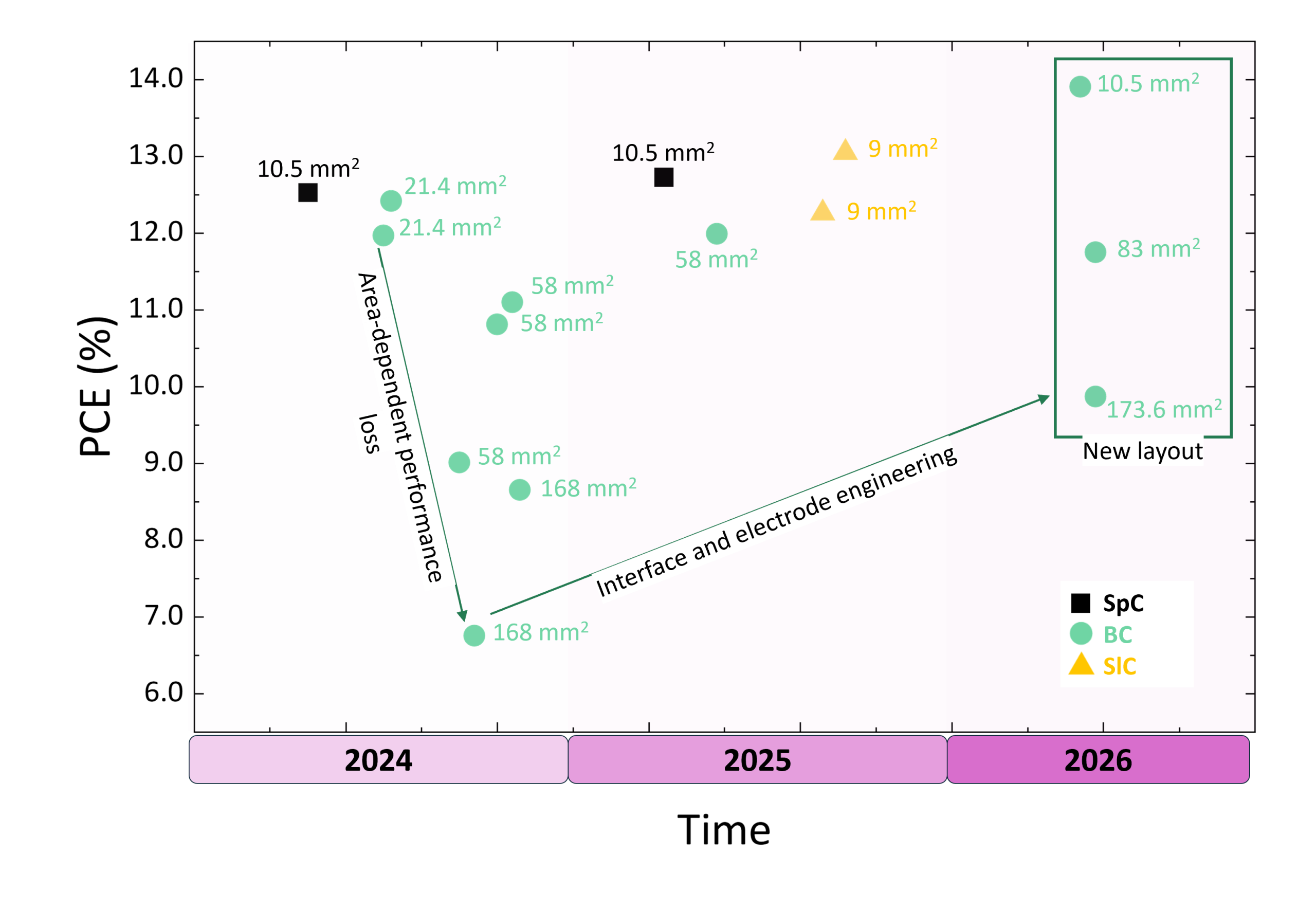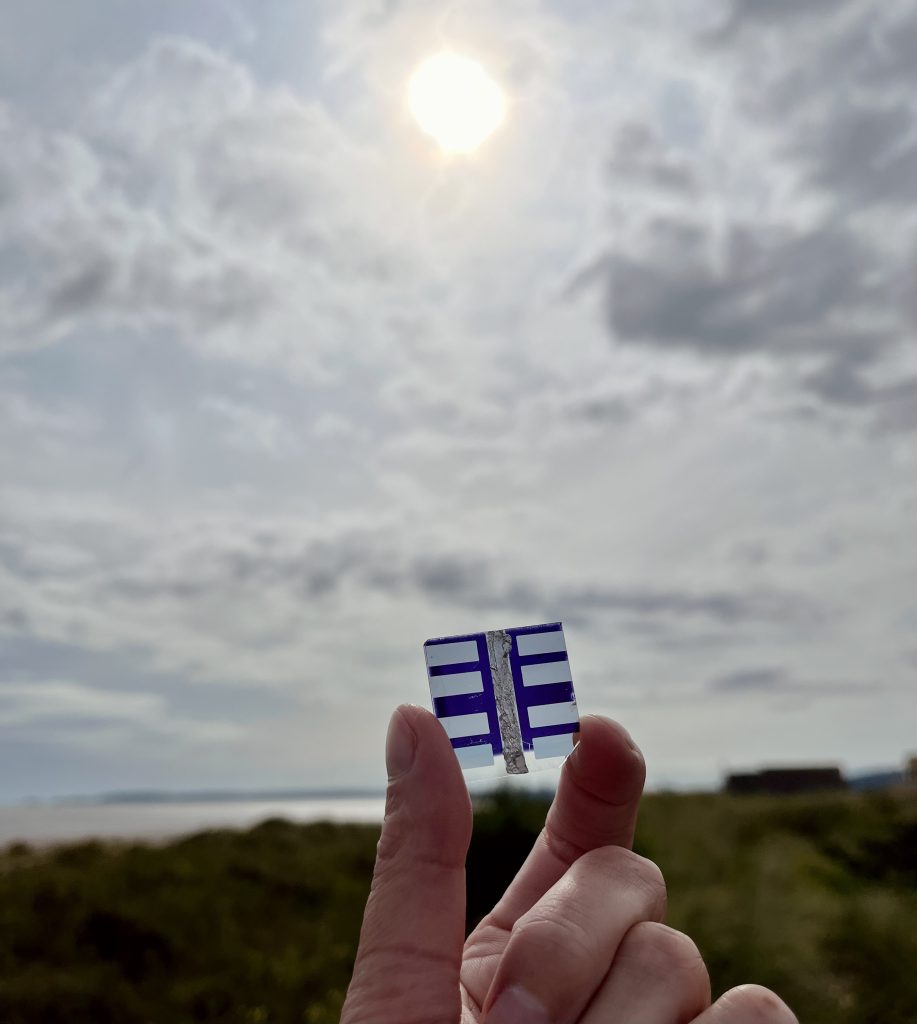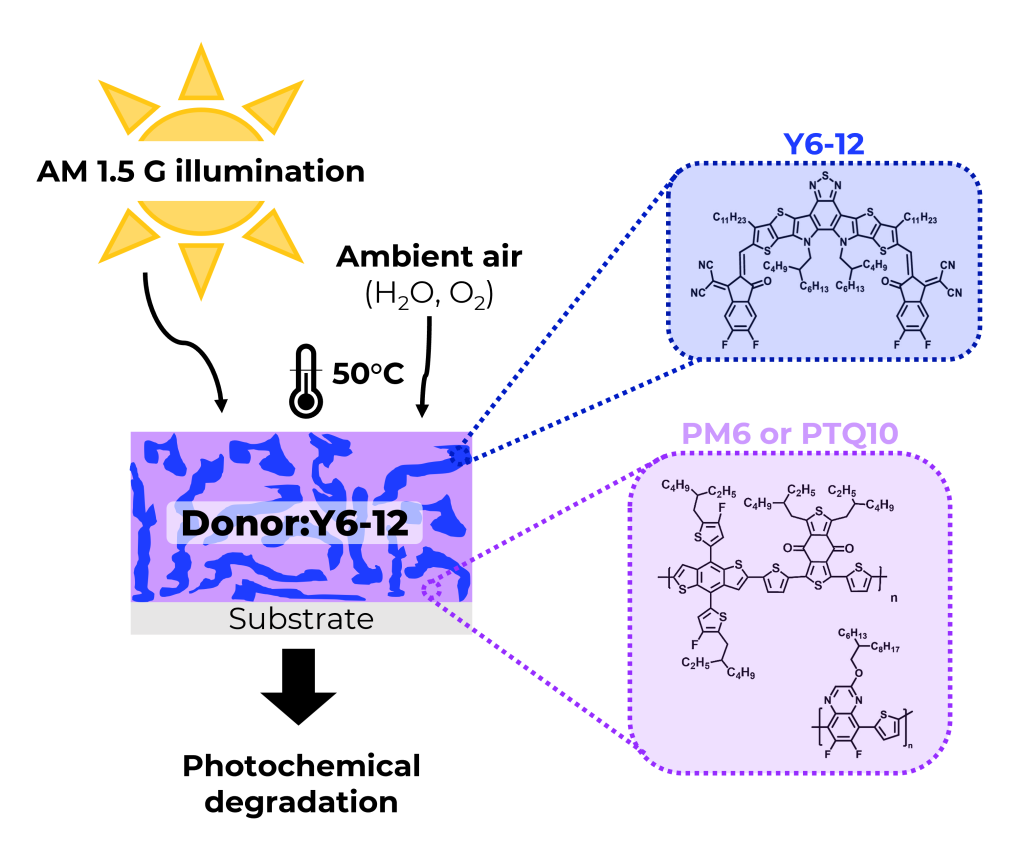


Organic solar cells promise lightweight, flexible, low-cost photovoltaics that can be printed at large scale — but a persistent gap separates record lab efficiencies (>20%) from the performance of real industrial modules (5-6%). This PhD addressed that lab-to-fab gap along three fronts: identifying which active-layer material combinations best resist photo-oxidative degradation under real operating conditions; transferring the best-performing system from spin-coating to fully printable processes (blade and slot-die coating), reaching efficiencies above 11% on nearly entirely printed devices; and redesigning the solar cell electrode geometry to curb the resistive losses that cripple performance as device area increases, improving efficiency from 8.7% to 10.5 % at comparable scale. Together, these results link material structure, stability and manufacturing process, and provide concrete design rules to bring printed organic photovoltaics closer to industrial deployment.