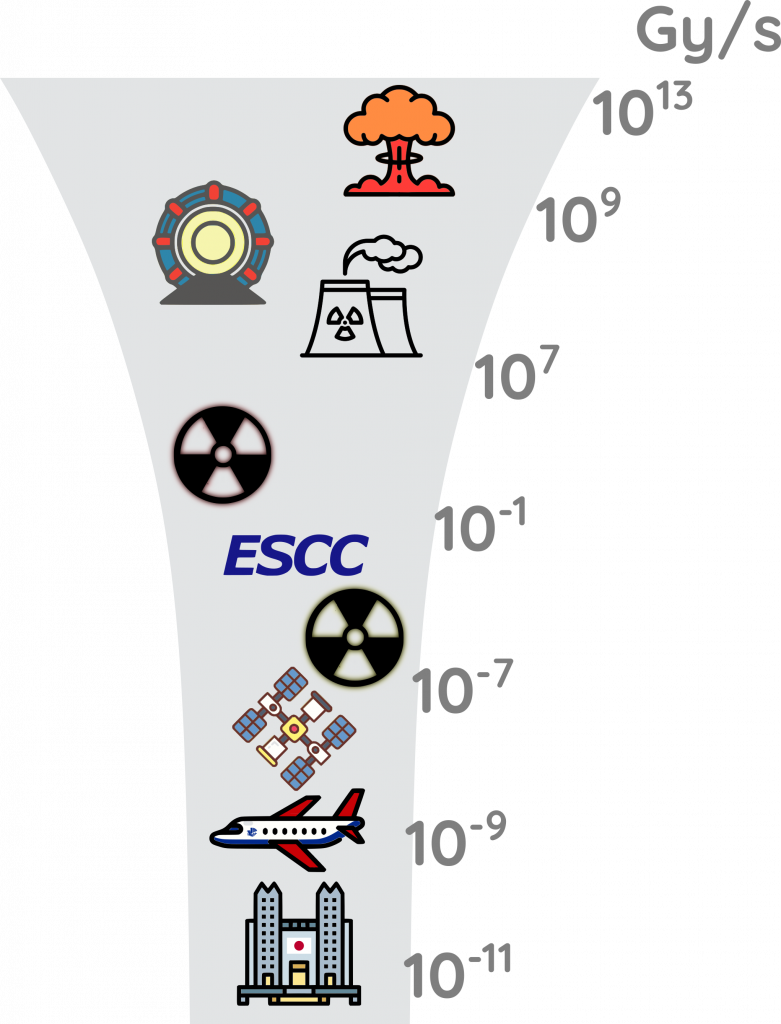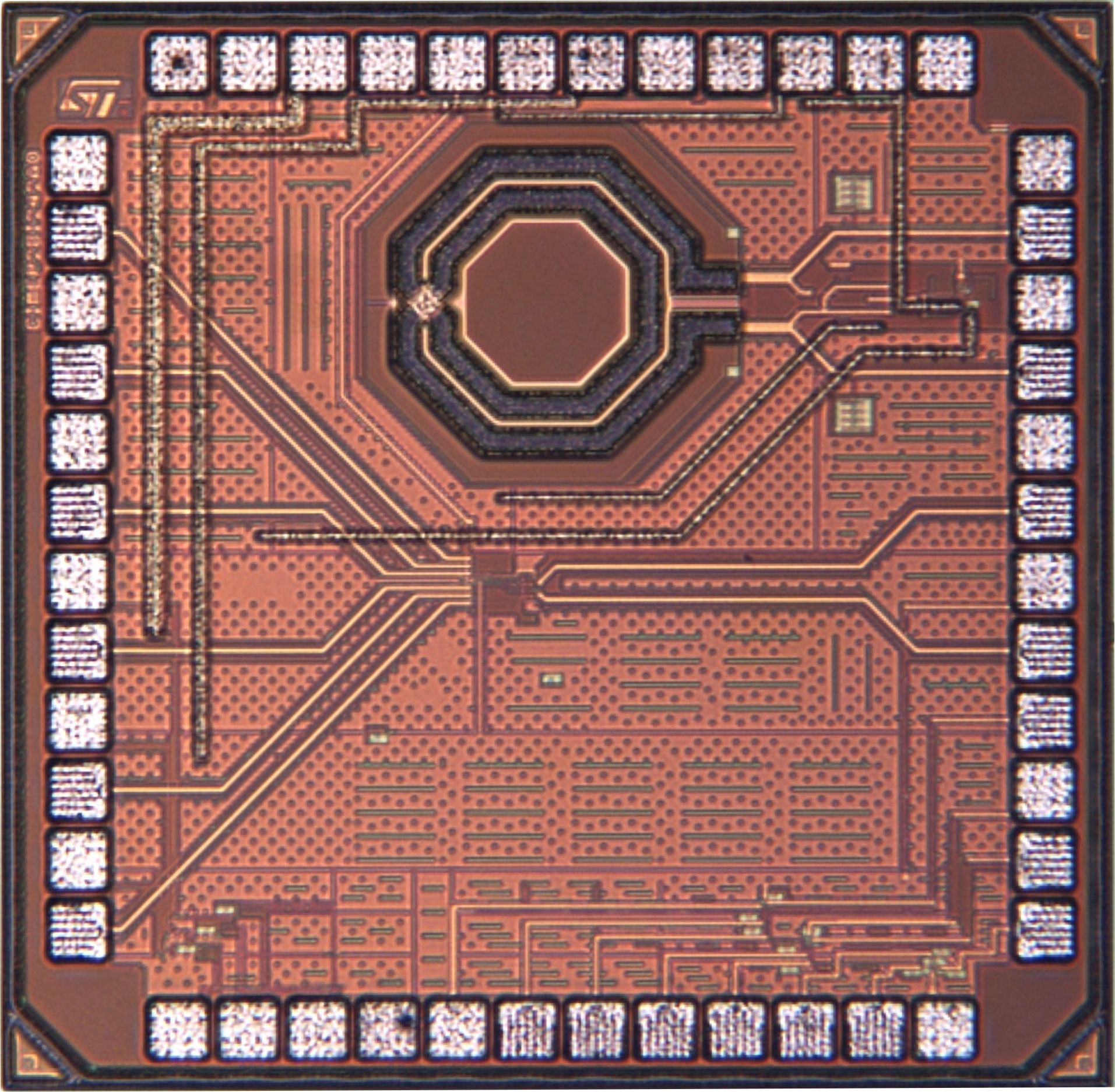


As nuclear power plants age worldwide, their decommissioning requires electronic systems capable of operating in highly radioactive environments. While radiation hardening has been extensively studied for space, aviation, and defense applications, the specific constraints of nuclear decommissioning remain insufficiently explored. Ionizing radiation generates electron-hole pairs in semiconductor materials, leading to parasitic effects that degrade integrated circuit performance. These effects include threshold voltage shifts, increased leakage currents, gain degradation, and digital errors. Among the key parameters governing radiation damage, dose rate plays a major role in the evolution of radiation-induced effects, particularly through parasitic currents generated in PN junctions. This thesis focuses on radiation-hardening techniques aimed at mitigating dose-rate-induced degradation. The main approach relies on the use of optimized guard ring structures to collect and evacuate radiation-induced currents while limiting area and performance penalties. To evaluate these hardening strategies, novel voltage reference topologies were designed and used as test vehicles. The proposed circuits were validated through simulations, fabricated, and experimentally characterized. This work provides a foundation for the development of robust electronic solutions specifically tailored to the demanding conditions encountered during nuclear decommissioning operations.