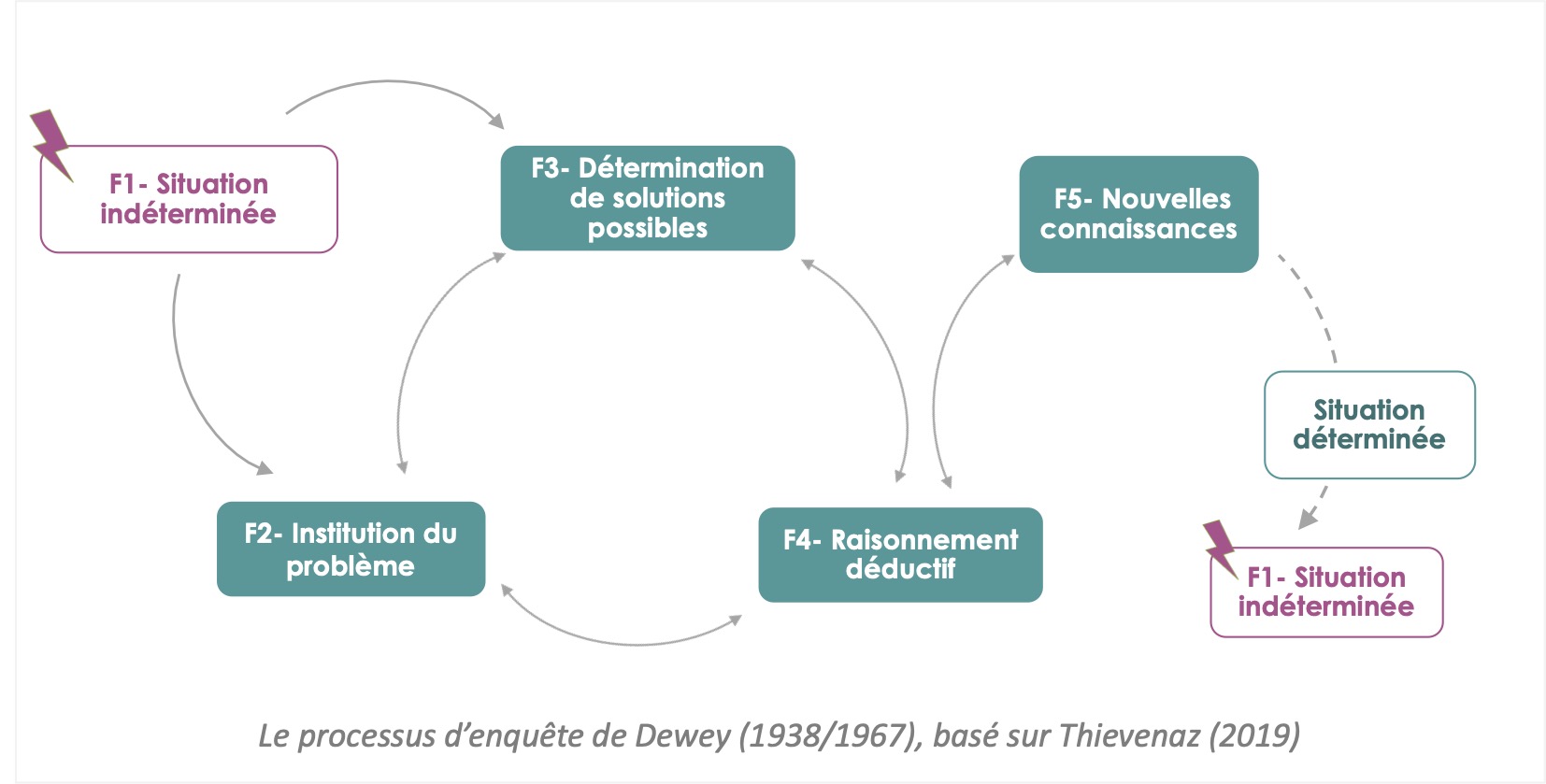


Organizational consulting falls under the umbrella of service activities, which involve working not only for, but also with, multiple stakeholders. In firms that promote the co-production of services, consultants strive to support client stakeholders in meeting their needs while also fostering skills development. This co-production approach makes the service more participatory, but also more destabilizing. Consultants are thus led to encounter “indeterminate” situations (Dewey, 1938/1967), prompting them to conduct “investigative” work with various stakeholders. The firm studied implemented organizational structures to encourage collective reflexivity and, consequently, this investigative work. How do consultants conduct investigations in their interventions? We attempted to answer this question through action research conducted within the firm and using qualitative methods (observations, interviews, and discussions related to the consultants’ activities, their interventions, and the structures). Our results show that investigative processes contribute to the redesign of interventions as well as to the establishment of rules and guidelines for the firm’s “community of practice.” Investigations within interventions have implications for service quality, helping consultants to provide sound advice to client organizations, and for health, through the development of participants’ skills. This empirical knowledge allows us to discuss the organizational conditions for conducting investigations and, more broadly, for structuring collective reflexivity within organizations.