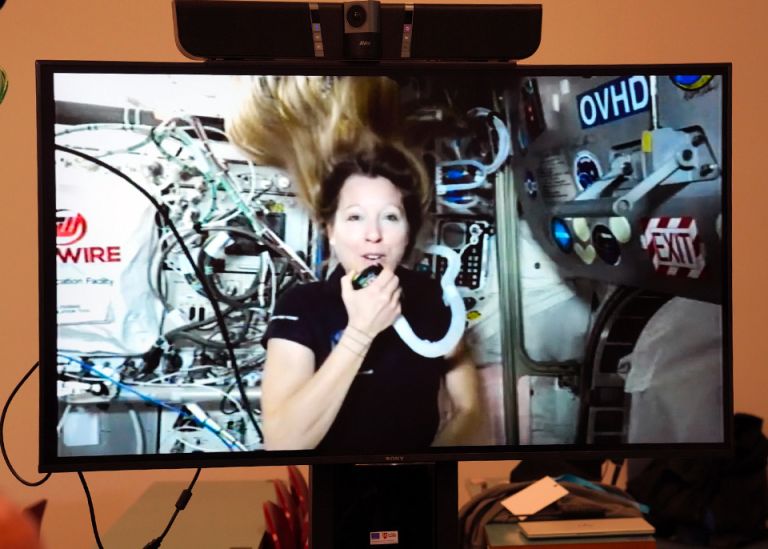


A direct connection to space, the result of collective effort
April 20, 2026 will remain a landmark date for participants in the MISSION:SOPHIE project. On that day, from the Bordeaux Institute of Technology, a group of pupils and students had the opportunity to speak live with astronaut Sophie Adenot, who was on mission aboard the ISS, nearly 400 kilometers above Earth.
This communication, made possible through the ARISS International program, was the culmination of more than a year of preparation involving faculty members, technical staff, and students.
From installing specialized equipment and coordinating teams to conducting meticulous rehearsals, every detail was carefully planned to enable this brief yet intense exchange. Beyond the technical achievement, it was, above all, a human experience, combining scientific curiosity, rigor, and a sense of wonder.
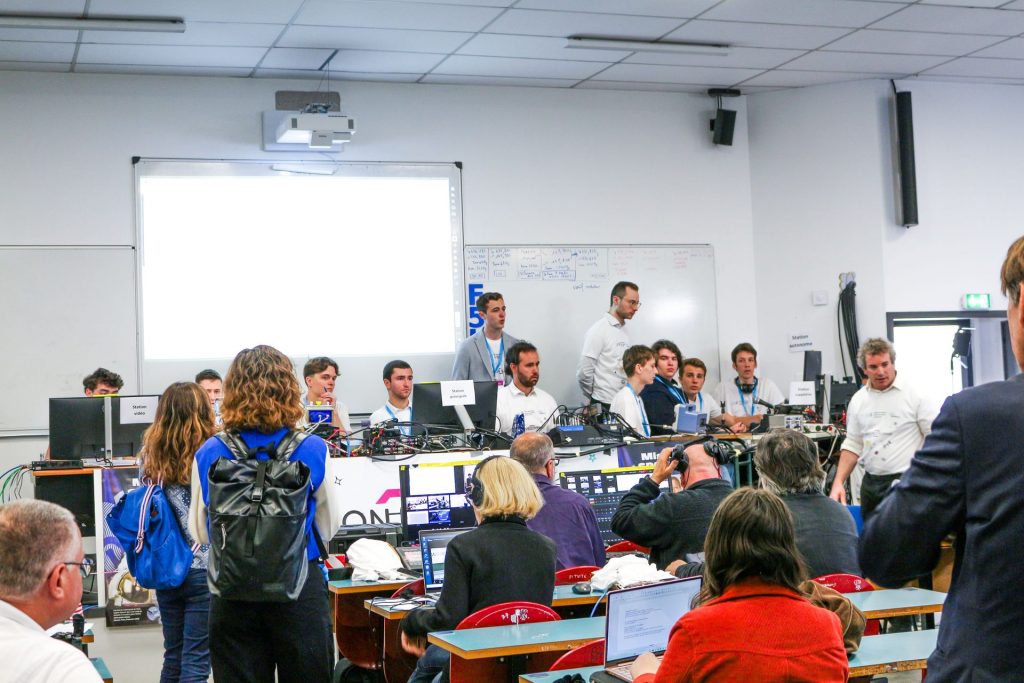
The key role of IMS teams
The IMS Laboratory played a central role in the success of this event, drawing on the expertise and commitment of several of its members.
Focus – Till Schmidt
As a PhD student in the Waves research group (ZeroPower team), Till Schmidt works on energy transmission for space applications as part of the European REMPOWER project. An active member of the Bordeaux Institute of Technology radio club (F5KBW), he served as senior coordinator of the operator team during the ISS contact, ensuring the smooth running of operations.
Focus – Raphaël Dauny
As an apprentice engineer, also within the Waves research group (ZeroPower team), Raphaël Dauny is involved in the GPR BEST and the ANR WEB project, working on a self-powered implantable sensor. For the event, he acted as sound and redundancy coordinator—a crucial role in securing the communication and anticipating any potential technical failure.
Beyond these individual contributions, the project was driven by a highly committed steering team, notably Simon Hemour, Associate Professor at the University of Bordeaux, and Timothée Levi, Full Professor and Head of the GEII department at the Bordeaux Institute of Technology, both faculty members at the IMS Laboratory. Their dedication, alongside that of academic and institutional partners, illustrates the laboratory’s ability to bring together diverse expertise around ambitious projects.
Special thanks also go to the other members of the steering team: Pascale Vergely, Deputy Director of the Bordeaux Institute of Technology, and Sarah Reverdy, Project Manager and member of the CAP ELENA team, whose joint commitment was decisive.
MISSION:SOPHIE: inspiring future vocations
While the exchange with the ISS was its highlight, MISSION:SOPHIE is part of a broader educational initiative. Since its launch, the project has engaged nearly 1,500 pupils, from primary school to high school, across the Nouvelle-Aquitaine region.
The activities offered (antenna design, introduction to radio communications, scientific workshops…) aimed to make science tangible and accessible. By placing students in hands-on experimental situations, the project helped spark curiosity and encouraged them to pursue studies in science and technology.
Beyond its technical dimension, meeting an astronaut actively involved in space exploration also carried strong symbolic significance, particularly in promoting the role of women in science.
A deep dive into research during the closing event
As part of the project’s closing day, the IMS Laboratory opened its doors to a final-year vocational class specialized in cybersecurity, IT, networks, and electronics.
This visit gave students the opportunity to explore the laboratory’s technological platforms and research areas. Guided by PhD candidates and interns, they were able to engage directly with early-career scientists in an environment that encouraged dialogue and knowledge sharing.
Co-organized with CAP ELENA, this initiative reflects a shared ambition to strengthen the attractiveness of careers in electronics and address training challenges in this strategic sector.
Focus – Noëlle Lewis and CAP ELENA
Full Professor at the University of Bordeaux and faculty member at the IMS Laboratory, Noëlle Lewis leads the CAP ELENA project. Funded under the national France 2030 investment plan, this program aims to support the development of electronics skills in the Nouvelle-Aquitaine region, in close alignment with industry needs and the challenges of technological sovereignty. To enhance attractiveness of electronics studies and careers, CAP ELENA implements innovative collaborative practices between higher education, research, and the national education system. MISSION:SOPHIE is an example of an unprecedented achievement.
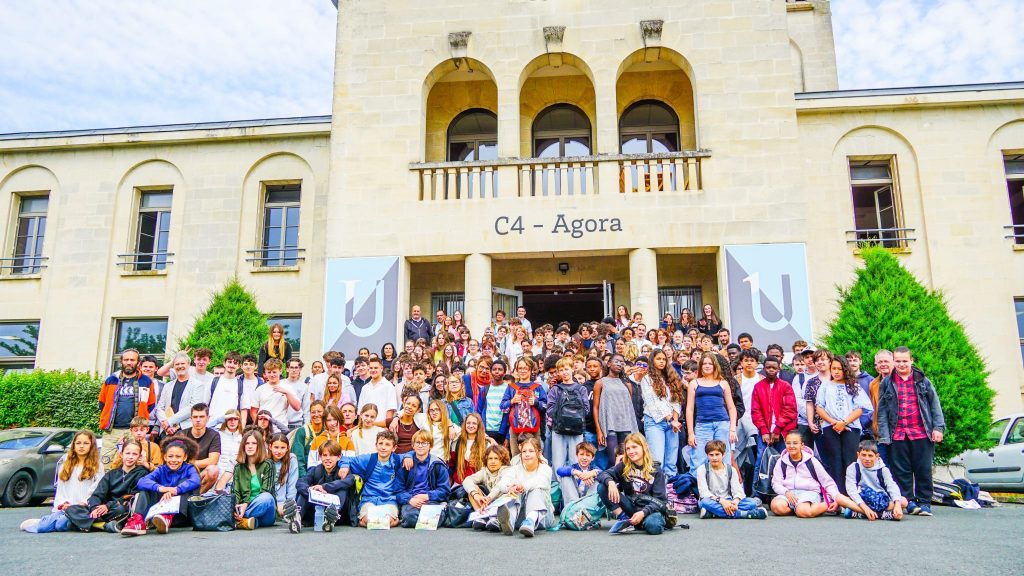
A collective momentum serving science and society
MISSION:SOPHIE embodies the success of a collaborative project bringing together a wide network of academic, scientific, and industrial stakeholders. It highlights the IMS Laboratory’s ability to take part in large-scale initiatives that combine scientific excellence, educational innovation, and engagement with society.
Beyond the technical achievement, the event has helped inspire new vocations, strengthen ties between research and education, and remind us that great scientific endeavors are, above all, human adventures.
Acknowledgments
MISSION:SOPHIE was made possible thanks to the commitment of a wide network of institutional, scientific, and industrial partners: Académie de Bordeaux, AMSAT Francophone, Année de l’ingénierie 2025-2026, ARISS International, ArianeGroup, Bordeaux INP, CAP BIOSPACE, CAP ELENA, CNES, CNFM Gip Inforism, France 2030, IMS Bordeaux, Bordeaux Institute of Technology, Maison pour la science en Aquitaine, Onisep Nouvelle-Aquitaine, Passion Radio, REF, Région Nouvelle-Aquitaine, Safran, SAPS, the University of Bordeaux, and the City of Gradignan.
© Cover photo by Olivier Got / université de Bordeaux


